


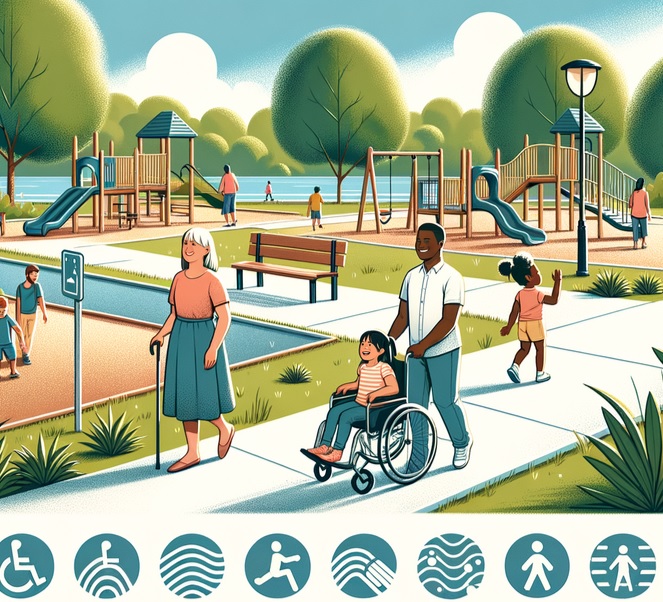
Introduction to AI for Accessible Design Optimization
Accessible Design Optimization AI is a tool that uses artificial intelligence technology to detect and improve accessibility issues in designs. As society places increasing emphasis on the need for inclusivity and accessibility, it is ever more important to ensure that products and environments are easily usable by all people, including people with disabilities. The emergence of this technology provides designers with effective solutions to help them create a more user-friendly experience.
The AI system identifies potential accessibility issues by analyzing the visual elements, layout, and interactive features of the design. For example, the system can check that color contrast meets standards, confirm that text size is appropriate, or evaluate whether navigation is intuitive. When problems are discovered, AI will provide specific improvement suggestions to help designers quickly correct the design to ensure that it meets accessibility standards.
The advantage of this technology is its efficiency and accuracy. Traditional accessibility design inspections are often time-consuming and easy to miss details, while AI can quickly perform comprehensive analysis. In addition, AI can also learn user feedback and behavioral data to continuously optimize the detection model and improve the accuracy of future detection.
The application scope of accessibility design optimization covers many fields such as website design, application development and physical space planning. Through this technology, designers can identify and solve accessibility problems at an early stage, thereby improving the usability and market competitiveness of products.
AI設計工具 | AI繪圖工具 | AI繪畫工具 | AI設計課程 | AI漫畫


「AI創業家社群」 是一個專為推動AI人工智慧創業者之間的交流與合作而設的專業平台。隨著AI技術的不斷進步,市場需求日益增加,為AI創業者提供一個支持性強、資源豐富的環境,幫助AI創業家在競爭激烈的AI市場中脫穎而出。

立即按此加入AI創業家社群

Copyright 2026, AI-Directories.com 香港AI工具平台 All Rights Reserved.